Intervention #36: Unce Upon a Time

26 July 2024 – 29 September 2024
Státní hrad Švihov | Žižkova 1 | Švihov | www.hrad-svihov.cz
Artists: Štěpán Brož, Filip Dvořák, Monika Kováčová, Natálie Pejchová, Magdaléna Roztočilová
Curator: Veronika Čechová
Production: Ondřej Houšťava
Švihov Castle enjoys an unusual status in the context of the Czech Republic, a country rich in castles and castle ruins. It is the youngest castle built in Bohemia at the end of the 15th century, at a time when the development of medieval-style castle construction was gradually coming to an end. Over several centuries of stone castle and fortress construction, the function of these structures changed from primarily defensive structures to residential spaces for the royal family, nobility, and wealthy individuals with connections to the nobility. However, these structures always combined residential and defensive functions to some extent. When relative peace reigned in Bohemia during the 16th century, Gothic castles gradually lost their military function. Many owners therefore began to rebuild old residences in the Renaissance style or build new ones, which became known as "chateaux" and placed greater emphasis on the comfort and social status of their inhabitants. The following centuries of the modern era pushed castles into the background of attention and use as unnecessary.
It was not until several centuries later, at the beginning of the 19th century, that a romantic interest in castles, and especially their ruins, emerged, manifesting itself in literature and the visual arts, among other things. We can observe the emergence of a number of celebratory works focusing on themes that were unusual at the time: people in a state of mental turmoil, loneliness, or alienation; metaphysical beings in the form of ghosts, demons, or fairy-tale characters; objects reminiscent of death, such as tombs and ruins; as well as dreams and fantasies. After several centuries, the nobility began to imitate medieval architecture, and many castles regained the appearance of Gothic castles thanks to reconstruction in the historicist style.
And just as the "rediscovered" attributes of the Middle Ages have come to be appreciated aesthetically with the passage of time, we can also see the rehabilitation of gradually outdated romanticism among the emerging artistic generations in contemporary visual art. To put it with a slight exaggeration: ruins and castles are back in vogue, as are reflections on the relationship between man and nature and their mutual dependence and influence. After decades of socially critical discourse, often going hand in hand with a formally restrained, conceptual approach to artistic work, the "romantic" ideals of emotional expression, authenticity, and spirituality are once again becoming the focus of one of the trends in contemporary visual art. In terms of material representation, we can observe a tendency to return to handicraft techniques such as sewing and embroidery on textiles, working with metal and other materials traditionally associated more with craftsmanship than with "high" art. However, all of this is often subjected to critical and ironic analysis during the creative process, which is difficult to avoid in an era defined by absolute awareness of current geopolitical events, including the devastating impact of human influence on planetary ecosystems. In the 21st century, the fascination with a romantic escape to the dilapidated ruins of long-forgotten settlements of heroic warriors in the midst of wild nature is inevitably imbued with a certain self-ironic awareness that a seemingly simple escape into the past is never a real solution to current problems.
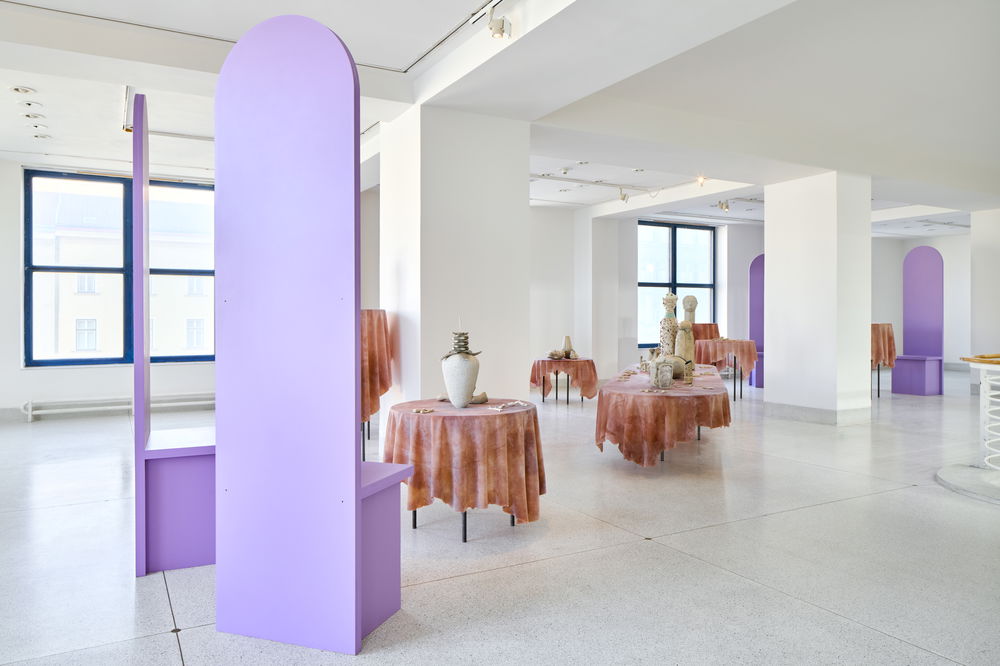
The authors of the upcoming generation presenting their work at the exhibition intervention in the interiors of Švihov Castle use evocative color tones and fantastical stylization to depict scenes that could just as easily be illustrations for a medieval novel as visual metaphors for contemporary nostalgia for a seemingly simpler period in human history. In many cases, the selected works are visually and aesthetically based on nature, but at the same time they reflect the human world with all its ambition, opulence, and vanity. They thus seamlessly connect to all the gradually accumulating meanings that exist simultaneously in today's view of the castle as one of the historically specific phenomena of human endeavor and the desire for security, success, and stability. This includes the effort to elevate oneself above others in a certain way, to stand out, and to leave behind a legacy that would withstand the test of time. All the works by the artists featured in the intervention Once Upon a Time offer their own authentic narratives. Together, however, they also create a complex whole of an imaginary alternative reality of the castle on various levels of its symbolism.
Contemporary art in your mailbox
Be the first in the picture. We'll let you know about new projects, exhibitions and other events of Jindřich Chalupecký Society and our partners.